The question "should I switch from cable to IPTV?" gets asked millions of times a year in the USA and UK. The honest answer is: it depends on your household's priorities. IPTV and cable represent genuinely different models with different strengths and weaknesses — and understanding those differences before cancelling your cable subscription is what separates a successful switch from an expensive mistake.
This guide covers every practical dimension of the comparison. For a deeper look at what IPTV subscription plans actually include and how pricing works, see our complete IPTV subscription guide.
The Fundamental Difference
Cable television is a managed service. A regulated provider installs hardware at your home, delivers content over a dedicated private network, and takes legal responsibility for service quality under a binding contract. IPTV delivers the same type of content — live television and on-demand video — over your existing broadband internet connection instead of a dedicated cable line.
This distinction has downstream consequences for everything else: cost, reliability, flexibility, content rights, and what happens when something goes wrong. Neither model is categorically better; they make different tradeoffs.
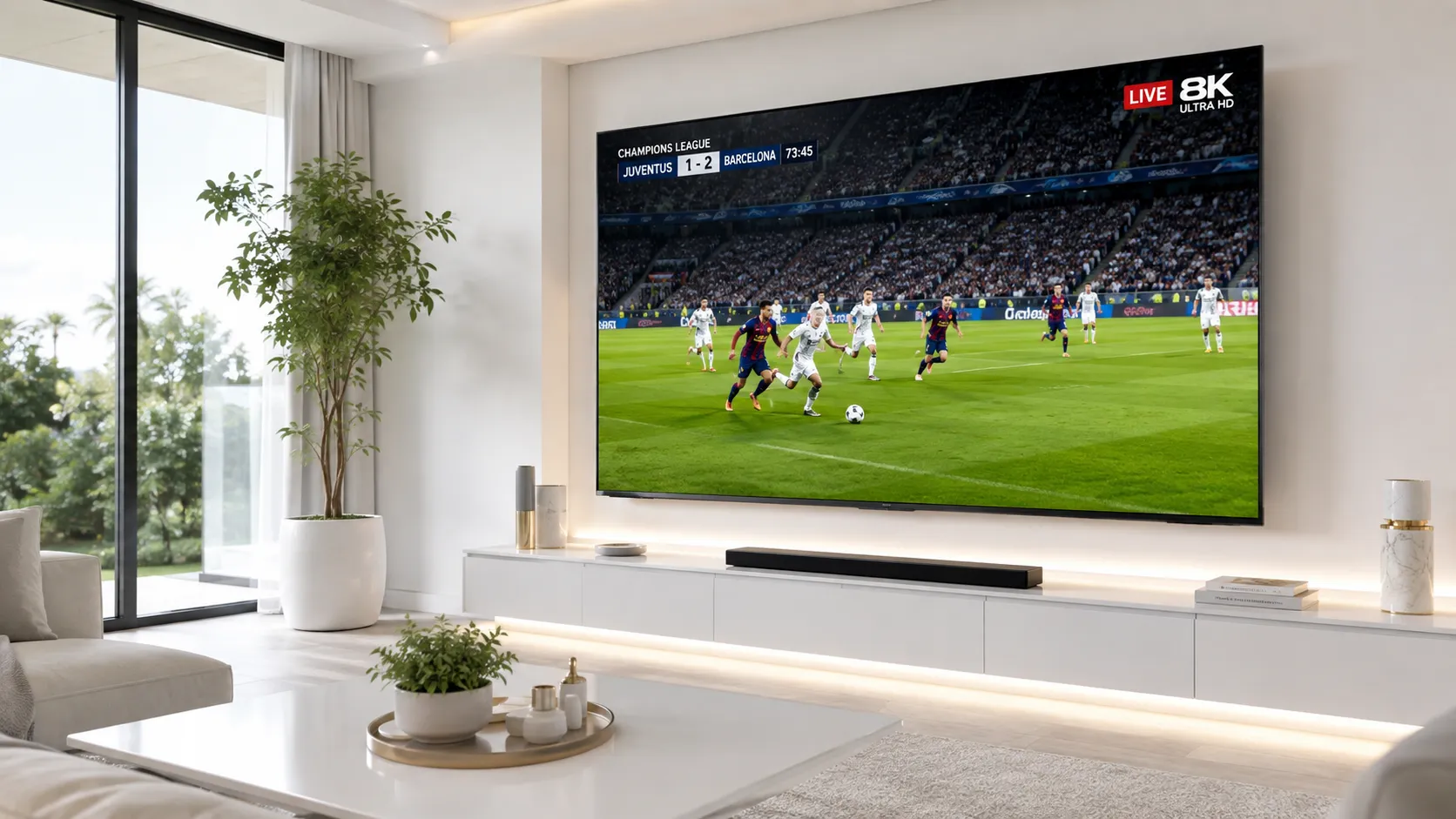
Cost Comparison: What You Actually Pay
Cost is the primary reason most people consider switching to IPTV. The headline difference is significant: cable bundles in the USA average $80–$120 per month, with equipment rental, regional sports surcharges, and broadcast fees frequently adding $20–$40 more. In the UK, Sky and Virgin Media packages typically run £50–£100 monthly for comparable channel counts.
A licensed IPTV service delivering equivalent channels costs considerably less — but the cost comparison is not as simple as it appears. Cable's higher cost includes infrastructure investment, local channel licensing, equipment, and regulated service guarantees. IPTV's lower cost reflects an internet-delivery model with different infrastructure requirements and, in many cases, different licensing arrangements that warrant scrutiny.
| Factor | Cable TV (USA) | Cable TV (UK) | Licensed IPTV |
|---|---|---|---|
| Monthly cost | $80–$160 | £50–£100 | $15–$25 / £12–£20 |
| Contract term | 12–24 months typical | 12–18 months typical | Monthly to annual |
| Equipment fees | $10–$25/month extra | £5–£15/month extra | None (use your own) |
| Installation fee | $0–$150 | £0–£50 | None |
| Cancel penalty | Often applies | Often applies | Rare (monthly plans) |
| Price stability | Frequent increases | Frequent increases | Variable |
Reliability: The Real Difference
Cable delivers content over a private, dedicated network that doesn't share bandwidth with your household internet usage. The signal is consistent regardless of how many neighbours are streaming simultaneously. In the UK and USA alike, a cable signal reliably delivers the same picture quality at 8pm Friday as it does at 3am Tuesday.
IPTV runs over your broadband connection, which it shares with everything else in your home and is affected by your ISP's network congestion, your Wi-Fi setup, and the provider's own server load. A well-configured IPTV setup on a fast, stable broadband connection approaches cable-like reliability — but getting there requires attention to detail that cable simply doesn't require.
For most broadband connections of 50 Mbps or more, day-to-day IPTV reliability is entirely adequate for regular viewing. The gap becomes visible during peak times, live sports events, and when your broadband connection is shared across many devices simultaneously. If you have a fast, uncongested broadband connection and use a wired connection for your streaming device, IPTV reliability approaches cable quality.
Channel Selection and Content
Modern cable packages in the USA and UK offer hundreds of channels, including local broadcast channels with full legal transmission rights, regional sports networks, premium tiers (HBO, Sky Cinema), and video-on-demand libraries. Everything included is licensed and delivered under a regulated framework.
IPTV channel counts are often very large — sometimes tens of thousands — but quantity and usability aren't the same thing. What matters is whether the specific channels you watch are included, whether they're stable, and whether any sports or premium channels present are delivered with proper licensing. Local broadcast channels are frequently missing from IPTV services that focus on international content.
Flexibility and Contract Terms
IPTV wins this comparison clearly. Monthly IPTV subscriptions require no long-term commitment, no installation engineer visit, no equipment return logistics, and no early termination fee. If you're unhappy, you simply don't renew. Cable contracts regularly include 12–24 month minimum terms with early cancellation penalties that can reach hundreds of dollars or pounds.
IPTV also offers device flexibility — your subscription credentials work on a Fire TV Stick, an iPhone, a tablet, and a laptop simultaneously (subject to connection limits). Cable typically requires a cable box for each TV. For more on connection limits and multi-device IPTV subscriptions, see our subscription guide.
Who Should Switch from Cable to IPTV?
- Good fit: Households with 50+ Mbps stable broadband who watch primarily international content, general entertainment, and don't depend on live local sports coverage or local broadcast channels
- Good fit: Viewers who want flexibility to cancel without penalty and test multiple services before committing
- Poor fit: Households with unreliable or slow broadband — the IPTV experience depends entirely on connection quality
- Poor fit: Sports-heavy households who need guaranteed, legally secured local sports coverage — this remains a cable strength
- Consider both: Some households use cable for local channels and live sports, and supplement with IPTV for international content
Before cancelling cable, run an IPTV trial for at least two weeks while keeping your cable subscription active. Test IPTV during your actual regular viewing hours, including any sports events you watch. Only cancel cable once you've confirmed IPTV meets your needs in practice, not just on paper. Our free trial guide explains exactly how to structure that evaluation.
Thinking about making the switch?
Ask us on WhatsApp — we can help you assess whether your broadband setup and viewing habits are a good fit for IPTV.
Get Advice on WhatsAppFAQ: IPTV vs Cable
For many households, yes — particularly those with fast broadband who watch primarily international or entertainment content. The caveat is local broadcast channels and live local sports, where cable still has a clear advantage in terms of licensing and reliability guarantees. Run a concurrent trial before cancelling cable to verify IPTV meets your specific needs.
With a stable broadband connection of 25+ Mbps and a wired Ethernet connection to your streaming device, IPTV can be reliable enough for daily viewing. The key variables are your ISP's network consistency, your Wi-Fi setup, and the quality of the IPTV provider's server infrastructure. Cable has an inherent reliability advantage because it uses a dedicated private network, not shared broadband.
IPTV stops working entirely if your internet connection goes down. This is a fundamental architectural difference from cable, which continues to work independently of your internet service. If your area experiences frequent internet outages, IPTV is a poor primary television source. If your internet is consistently reliable, this is rarely a practical issue.
Some IPTV services include local broadcast channels, but coverage is inconsistent and varies by provider and geographic region. In the UK, national channels like BBC One and ITV are available free via other means (Freeview, Freesat, streaming apps like BBC iPlayer). In the USA, local ABC, CBS, NBC, and Fox affiliates are often missing from IPTV lineups or available only through licensed live TV services like YouTube TV or Hulu + Live TV.
On a good broadband connection with a quality IPTV service, 1080p HD streams are visually comparable to cable HD. Cable HD typically delivers 1080i at consistent quality; IPTV HD quality varies with server load and connection stability. IPTV has the advantage in 4K availability — many providers offer UHD streams that cable packages rarely include at comparable price points. See our 4K IPTV guide for details.
The saving is real — often $50–$100 per month in the USA or £30–£60 in the UK. Whether it's "worth it" depends on your broadband quality, your viewing habits, and your tolerance for occasional technical issues that cable doesn't present. Run a concurrent IPTV trial first. If you find yourself watching IPTV exclusively for two weeks without missing cable, the switch is probably right for your household.